

Facebook | X | Instagram | YouTube | LinkedIn | Threads | TikTok
BLUF
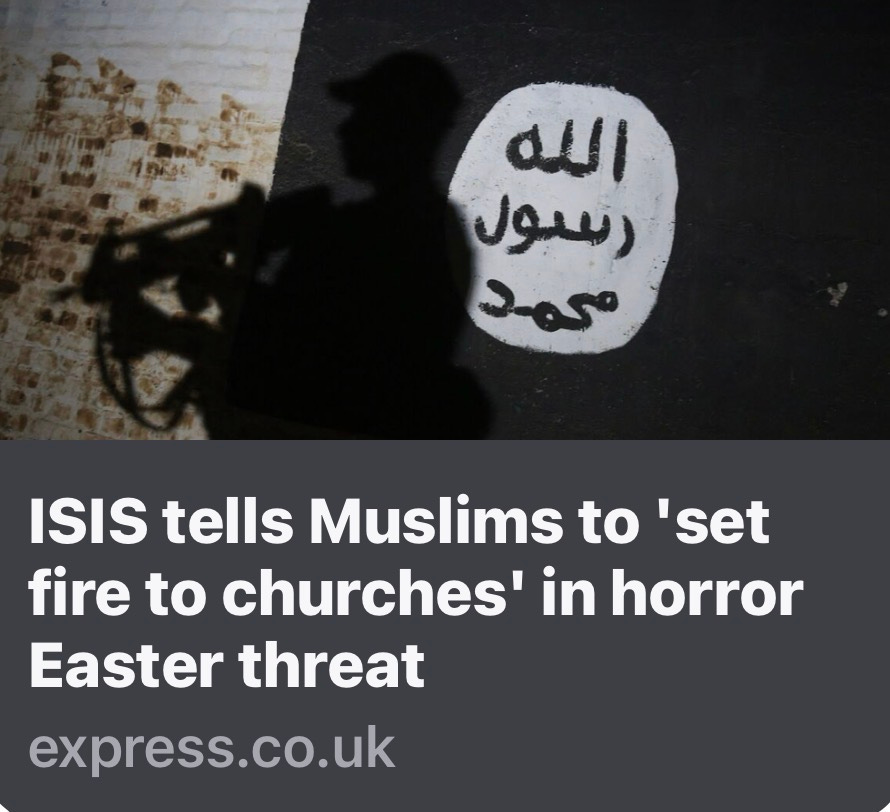
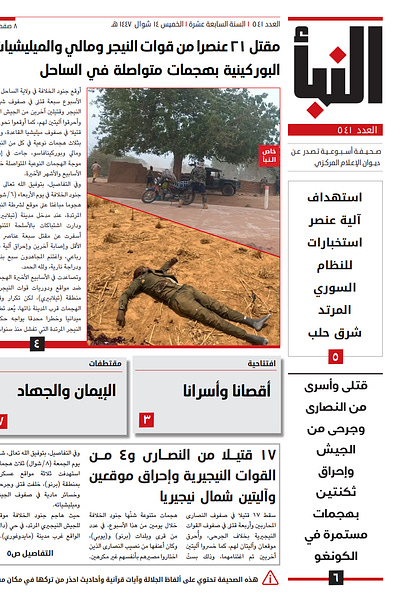
ISIS published an operational call in its official al-Naba newsletter (Issue 541, April 3, 2026) ordering followers to set fire to Jewish synagogues across America, Europe, Russia, and India. We reviewed the source document directly. The specific call targets Jewish sites, tied to the Israeli closure of the Al-Aqsa Mosque. Outlets across the country have been reporting this as a call to burn Christian churches as well. That specific language does not appear in the quoted ISIS text, and we are going to walk through exactly where that claim came from. The threat to churches this Easter is real and we will explain why, but your security team deserves an accurate assessment, not a headline that got loose. Al-Qaeda’s Inspire magazine also published bomb-making content days earlier. Both threat streams are active. Treat this weekend as a heightened threat environment.
Key Judgments
Highly Likely: A lone actor inspired by ISIS’s Easter messaging will attempt an attack on a Christian congregation or Jewish synagogue in the United States or Western Europe within the next seven days.
Highly Likely: Any domestic attack will come from an individual with no direct ISIS command-and-control link, someone radicalized online who self-activates based on the al-Naba call or Inspire content.
Highly Likely: The attack method will not be limited to arson. Inspire magazine released bomb-making instruction days ago, and a complex attack using multiple methods including fire, IEDs, firearms, or vehicle ramming is a realistic planning assumption. Do not fixate on a single method.
Likely: Arson remains one component of the threat given ISIS’s explicit fire directive and the recent attack cluster in Michigan targeting religious institutions, but it is not the only tool available to a motivated actor.
Unlikely: A coordinated, multi-site attack organized directly by ISIS will occur in the continental United States in this window, given the degraded state of ISIS external operations infrastructure.
What ISIS Actually Said
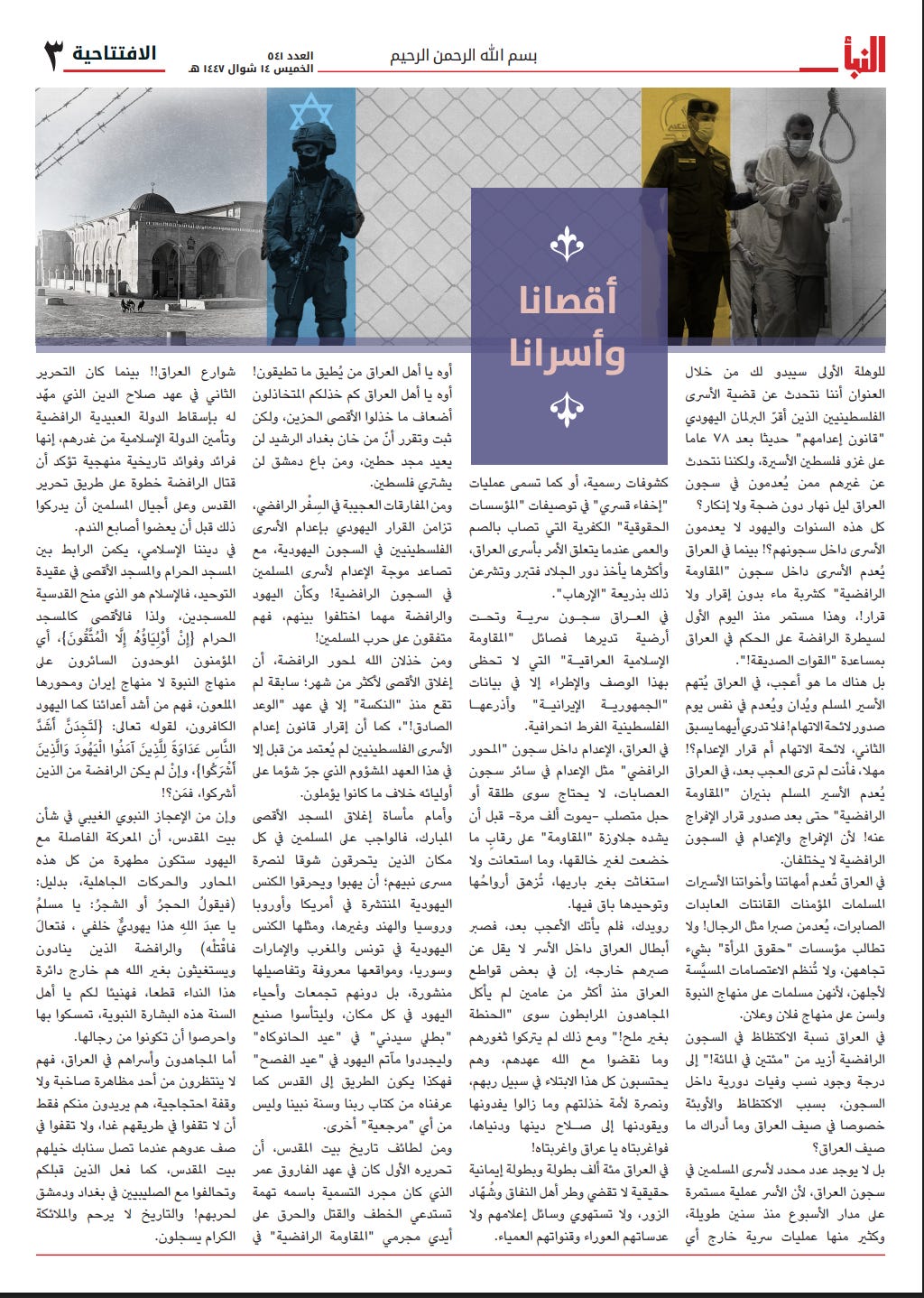
This assessment is based on a direct review of the source document, not on secondary press reporting. We obtained and read al-Naba Issue 541.
In the editorial section titled “Our Al-Aqsa and Our Prisoners,” the ISIS Central Media Office published the following operational call: followers are instructed to rise up and set fire to Jewish synagogues in America, Europe, Russia, India, Tunisia, Morocco, the UAE, and Syria. The editorial states the locations of these targets “are well known and their details have been published,” which is language designed to lower the threshold for action. It invokes the 2025 Bondi Beach attacker in Sydney as a model to emulate, and it calls for attacks timed to Passover. That is what the document says.
The word “churches” does not appear in that specific call.

Where the Church Reporting Came From
Since this story broke, CWT has received calls and messages from people forwarding reports that ISIS specifically called for burning Christian churches this Easter. That reporting is circulating widely and it is not precisely accurate. Here is the sourcing chain.
The Daily Express in the UK broke the story and quoted Lucas Webber, a Senior Threat Intelligence Analyst at Tech Against Terrorism, as their primary expert. Webber is a credible analyst. In December 2025, following the Bondi Beach attack, he told Newsweek that ISIS’s risk was particularly acute for “targeting religious institutions, Jewish and Christian gatherings, and other public celebrations,” and that online spaces sympathetic to ISIS had been “amplified calls for additional violence against Western targets, Jews, and Christians.” That was accurate expert analysis based on monitoring ISIS online communities, not just the newsletter text.
When the Daily Express called him about al-Naba 541, he applied that same broader and legitimate analysis. The problem is what happened next. The AOL wire piece quoted the specific ISIS synagogue text and then added one editorial line with no direct quote: “It called for similar attacks on churches.” GB News quoted only the synagogue text but ran a headline saying “churches and synagogues.” Every outlet after that copied the headline framing without reading the source. Nobody who ran “churches” in their headline appears to have read the al-Naba editorial directly.
Webber’s underlying analysis is not wrong. ISIS does target Christians. The threat to churches is real. But it was expert commentary on ISIS’s broader doctrine, not a direct quote from al-Naba 541, and the press treated it as the latter. That distinction is worth making clearly so your security team understands what they are actually dealing with.
Why the Church Threat Is Real Anyway
Even though the specific editorial call targets Jewish sites, the threat to Christian congregations this Easter weekend is well-grounded for three reasons.
First, the rest of al-Naba 541 is filled with operational reporting on ISIS attacks against Christians. Pages four through six cover ISIS operations in Nigeria and the Congo where ISIS systematically attacks Christian communities, burns churches, and executes Christian civilians. ISIS refers to Christians throughout the newsletter as “Crusaders” and treats them as active enemies. The editorial targeting Jewish sites exists in a newsletter that documents ongoing violence against Christians as a matter of routine.
Second, ISIS doctrine broadly and consistently identifies Christians as enemies. The group does not need to publish a separate call to attack churches for Christian congregations to be at risk. Their established ideology makes that targeting assumption permanent.
Third, the Michigan attack cluster deserves specific attention. Michigan has seen three targeted attacks against religious institutions in the past nine months, including arson attacks at a synagogue and an LDS ward. That is an unprecedented pattern in recent American history. The combination of that local attack cluster with a national ISIS call timed to Easter weekend creates compounded exposure for Michigan congregations specifically, but the pattern is a warning sign for the rest of the country as well.
The Inspire Magazine Overlay
The ISIS call does not stand alone. Al-Qaeda’s Inspire magazine published bomb-making content within the past several days, providing technical instruction to the same general audience: English-speaking individuals in Western countries who can be motivated to act without organizational support. When both publications are running attack-encouragement content during the same religious holiday window, the result is a combined threat feeding the same lone-actor risk profile through two separate pipelines.
The available attack methods reflect both streams. Fire is one option. Improvised explosives are another. Firearms and vehicle attacks remain available to anyone. The Inspire content specifically means a complex attack using multiple methods is a legitimate planning assumption this weekend, not a remote possibility.
What Your Team Should Do Before Sunday Morning
Brief every security volunteer before Easter services begin. Make sure every person on your team knows their assignment and knows what to do if something goes wrong. Coordinate with local law enforcement today if you have not already done so. Know where every exit is and confirm your team does too. Run the service with someone outside watching the parking lot and the perimeter, not just inside watching the congregation.
Review your fire response protocol. An arson attack during a packed Easter service is not just a property incident; it is a life-safety emergency. Know where your fire extinguishers are, know your evacuation routes, and make sure your team has a clear plan if smoke or fire appears during a service.
Easter Sunday carries the largest single-day attendance of the American church year. Many congregations that see modest weekly numbers will have overflow crowds this Sunday. Visitors unfamiliar with the building, extended service times, full parking lots, and multiple service windows all contribute to a more complex security environment than a typical week. This is the profile a lone actor looks for. Plan accordingly.
Threat Assessment
The current threat posture for American churches is RED. That assessment rests on three compounding factors: an explicit ISIS directive to attack Jewish sites released 48 hours before Easter Sunday, with a surrounding newsletter documenting ongoing ISIS attacks against Christians; al-Qaeda’s simultaneous release of bomb-making guidance through Inspire; and the highest single-day church attendance period of the year. The primary threat is not an organized cell. It is the individual who has been consuming this content online and reads the al-Naba call as personal religious authorization to act. Michigan congregations carry additional exposure given the local attack pattern. The overall posture should be: alert, calm, deliberate, and prepared.
Biblical Lens
This is Resurrection Sunday. Whatever this world sends at the people of God, it does not have the last word. That is not sentiment. It is the foundational fact of the Christian faith, and it is worth keeping front of mind for every person standing post on Sunday morning.
“He is not here, for he has risen, as he said. Come, see the place where he lay.” — Matthew 28:6 (ESV)
The same Lord who walked out of that tomb is coming back. Every Easter service your team guards is a congregation gathered around that truth. You are not guarding a building. You are protecting people who have come to remember and celebrate the most important event in human history. Keep that in front of you on Sunday morning. The threat is real, your preparation is necessary, and the Lord who rose from the dead goes before you.
“I am the resurrection and the life. Whoever believes in me, though he die, yet shall he live.” — John 11:25 (ESV)
Leave a comment below with what your team is doing this Sunday and share this with your pastor or security team leader before Easter morning. They need to see it.
“But if the watchman sees the sword coming and does not blow the trumpet, so that the people are not warned, and the sword comes and takes any one of them, that person is taken away in his iniquity, but his blood I will require at the watchman’s hand.” — Ezekiel 33:6 (ESV)
Thank You, Keith, for your efforts to warn Houses Of Worship withe the info to help them Be Prepared, Ready To Act or React to threats coming. Christian Warrior Training is a real Blessing in helping to plan.
your article says "Al-Naba called for the burning of synagogues, not churches." This is not true. They did not say Synagogues, they said literally to burn “the Jewish churches” they didn't say synagogue but that is what they meant.
أن يهبّوا = “to rise up” / “to mobilize”
ويحرقوا = “and burn”
الكنائس اليهودية = literally “the Jewish churches”
This is incorrect terminology (Jews do not have churches).
In context, this almost certainly intends “synagogues”, but the text uses the wrong word.
It helps to understand where the confusion came from and as you noted the press got it wrong and made it worse by including Christian churches.