


There is a moment in the New Testament that speaks to something many of us face inside our own churches. Jesus returned to Nazareth to teach, and the people who had known Him for years dismissed Him. They could not accept that the boy they watched grow up had become the One sent to save them. That passage has been on my mind because I hear the same struggle from Christian Warrior Training followers almost every day.
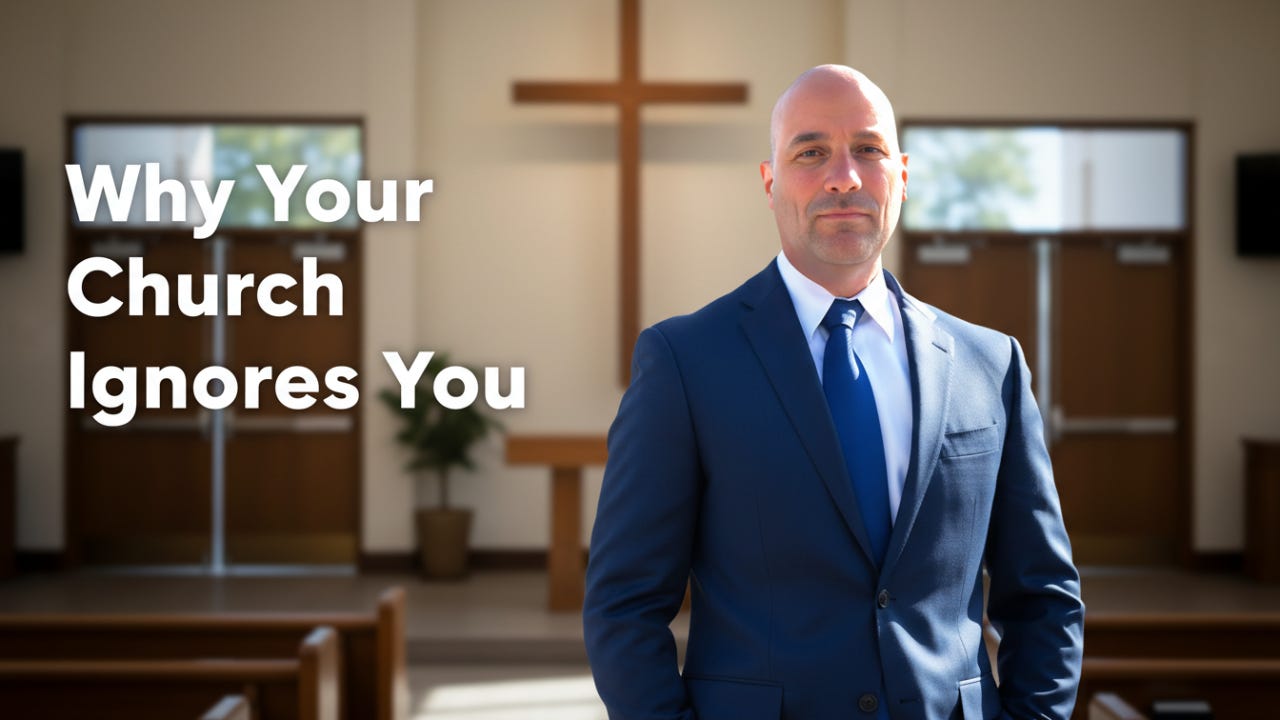
Men and women write to me with serious backgrounds. Some served on SWAT teams. Some worked in military intelligence. Some have decades of police experience. Others have spent years studying church security through this ministry and have become knowledgeable, disciplined protectors for their congregations. Yet when they try to bring ideas to their leadership, they are turned away. They are told no. They are brushed off. They are treated like they have nothing to offer.
I understand that feeling because I have lived it.
Before I ever taught nationally, I was just a young cadet at my department. I acted like a young man with no experience, and people remembered that version of me. Years later, after working deep in narcotics, after training agencies across the country, after building a career on hard lessons learned from real cases, there were still leaders who only saw the kid I used to be. They held onto that early image and never updated it.

The older I got, the more noticeable that became. I could travel somewhere else and speak to a room full of officers, and the agency would make changes before I even left the city. Yet at home, the same experience carried no weight.
I remember teaching at a national conference in front of a thousand people. After my class, a police officer approached me. He was a nationally known firearms instructor, prior special forces, and one of the best teachers in the country. I had followed his work for years and planned to train with him myself. He told me he had been reading my articles for a long time. Then he said something that stopped me.
He said, “I can tell the trajectory of your career. You have been passed over by people less competent than you. You teach all over the world, but your own department does not take you seriously. You come to a conference and suggest something, and agencies change policy. But at home, nothing happens.”
He was exactly right.
I saw the same thing in his life too. This man could not even get a firearms instructor spot in his own sheriff’s department even though he was better qualified than anyone there. It did not make sense until I remembered that line from Scripture. A prophet is not honored in his own town.
That pattern is not new. It is human nature.
And it is the same pattern that many of you are walking through in your churches.
I have a church I love deeply. I am grateful for the leadership there. They listen to many of my recommendations. But there are things I have tried to implement for six years, and I still cannot get them approved. I am not angry about it. I understand why. Churches are filled with people who see the world through different eyes. Their experience does not match mine. Somewhere between their optimism and my knowledge of real-world violence is the truth. If we can meet in the middle, churches can be safer.
Your situation is not new. Your struggle is not a sign that you are doing something wrong. Even Jesus faced the pain of being dismissed by the very people who should have known Him best.

The Biblical Pattern of Rejection
When Jesus returned to Nazareth to teach, the reaction was not awe or gratitude. It was dismissal. Matthew records their words plainly:
“Where did this man get this wisdom and these miraculous powers? Isn’t this the carpenter’s son?”
— Matthew 13:54–55
To them, His background outweighed His message. Mark adds an even stronger line:
“They took offense at Him.”
— Mark 6:3
Luke gives us the most complete picture. After hearing Him teach, the crowd became angry enough to drive Him toward the edge of a cliff (Luke 4:28–29). Their response was not rooted in logic. It was rooted in familiarity, bias, and the discomfort that rises when someone you thought you understood speaks with authority you did not expect.
Jesus explained it with a simple but honest sentence:
“A prophet is not without honor except in his own town and in his own home.”
— Matthew 13:57
He did not say this to elevate Himself above others. He said it to prepare His followers for what they would experience. People often reject truth not because it is false, but because it comes from someone they believe they have already figured out.

And that brings us to the reality many church security leaders face today.
Your struggle is rarely about a lack of experience. It is rarely about your ideas being unsafe or unreasonable. The resistance often comes from something deeper and more human. People carry unconscious biases that shape how they hear you. Some see you through the lens of who you were years ago. Some hold tightly to their worldview and feel uncomfortable when danger becomes real. Some feel threatened by change. Some simply cannot imagine that someone inside their own congregation could have the level of training or professional insight you carry.
It is not always about your background. It is not always about your growth being unnoticed. Sometimes it is as simple as this: people have a hard time receiving hard truths from familiar faces.
Church leaders are not immune to this. None of us are.
This does not make them evil. It makes them human. The same pattern showed up in Nazareth. It showed up with Moses when the Israelites questioned his leadership (Exodus 2:14, Exodus 5:21). It showed up with David when his own brothers dismissed him before he faced Goliath (1 Samuel 17:28). It showed up with Joseph when his brothers rejected the dreams God gave him (Genesis 37:19).
This is a recurring biblical theme because it reflects something real about how people behave.
And this is why the challenges you face today feel familiar to people across the country. You are living the same tension that faithful men and women have walked through for thousands of years.
The passage in Matthew, Mark, and Luke is not just a story about Nazareth. It is a reminder that rejection can follow anyone who steps into their calling.

Why Your Calling Still Matters Even When You’re Ignored
Rejection does not erase a calling. If it did, none of the men and women we look up to in Scripture would have finished what God gave them to do. What you are facing in your church does not change the responsibility God has placed on your shoulders. It also does not change the gifts He has given you.
When Jesus walked out of Nazareth after being dismissed, He did not argue, and He did not slow down. Luke says He went on to Capernaum and continued teaching with authority (Luke 4:31–32). His mission did not begin with Nazareth’s approval, and it did not end with their rejection.
This is an important truth for church security leaders and volunteers to understand.
Your purpose is not tied to whether your church leadership always listens to you.
Your purpose is tied to being faithful with what God has shown you.
The Bible shows this pattern over and over.
Moses was rejected before he ever became the leader God called him to be (Exodus 2:14).
Joseph was rejected before he ever saved his family (Genesis 50:20).
David was underestimated before he ever stepped onto the battlefield (1 Samuel 17:28–37).
None of these men waited for perfect support.
They kept moving because they trusted the One who called them.
Many of you have a strong burden to protect your congregation. You see risks others do not see. You understand how quickly violence can appear because you have lived around it. You know the heartbreak that comes when evil finds people who are unprepared. You are not driven by fear. You are driven by responsibility.
And that responsibility does not disappear when someone tells you no.
Your mission is not to argue your way to authority. Your mission is to be faithful with what you know, to serve the congregation God placed you in, and to keep applying wisdom even when the process is slow.
This is where perseverance matters.
This is where humility matters.
This is where obedience matters.
If Jesus had stopped after Nazareth rejected Him, none of us would be reading these words. He continued because His mission did not depend on human acceptance. He kept teaching, healing, leading, and saving until the work was complete.
Your calling is not the same as His, but the principle still applies.
Rejection does not cancel responsibility.
It does not remove your gifting.
It does not change what God wants you to do for your church.
You may be ignored by people who do not understand the experience you carry, but you are seen by God, and He knows exactly why He placed you in that building at this moment in time.
Your calling remains intact even when others fail to recognize it.

How to Stay Faithful When Your Ideas Are Dismissed
When your recommendations get turned down, it is easy to feel like you are wasting your time. Some people begin to withdraw. Others push so hard that frustration takes over. Neither one helps the church. God calls us to something steadier.
Here are the attitudes and actions that keep you steady when leadership does not see what you see.
Stay anchored in humility
Your experience matters. So does your training. But humility keeps your heart in the right posture. Scripture tells us that God “gives grace to the humble” (James 4:6). Serving with humility reminds you that your role is not about proving your value. It is about protecting the congregation God has placed in front of you.
You may not get the outcome you want right away, but you will always honor Christ when you approach the work with a humble spirit.
Focus on building trust
People listen to those they trust. That trust is built slowly, through consistency and character, not through force. When leadership sees that your motive is care, not control, doors start to open.
Proverbs 22:1 says a good name is more valuable than riches. A good name in a church setting comes from steady service, respect, and patience.
Use the influence you do have
You may not be able to implement everything, but you can still make a real impact.
You can train your team.
You can mentor new volunteers.
You can improve internal communication.
You can strengthen medical readiness.
You can walk the property and tighten up weak points.
You do not need full authority to make your church safer.
Stand steady in the truth
When others do not see the risks, you may be tempted to soften the message. Do not do that. You do not need to preach fear or alarm anyone, but you should speak the truth clearly whenever the opportunity comes.
Ezekiel 33 describes the watchman’s duty. The watchman was held responsible not for the outcome, but for sounding the warning faithfully. That is the same posture you carry today.
Pray for the people making decisions
It can be hard to pray for leaders who overlook your insight. Do it anyway. Prayer keeps your heart clean and prevents resentment from growing. It also invites God to move in places where your words cannot.
Paul tells Timothy to pray for all who are in authority (1 Timothy 2:1–2). That includes church leaders making tough decisions with limited information.
Remember that God sees what others miss
Jesus did not stop His mission just because the people closest to Him rejected His message. He kept walking because His mission came from the Father, not from Nazareth.
Your mission is the same. Not the same in scale, but the same in nature. Your calling does not rise or fall based on recognition. God sees the work you do, the long hours you put into training, and the care you carry for the congregation. He sees the nights you stay up thinking about church vulnerabilities. He sees the weight you carry when others brush off your concerns.
If God has put this calling in you, it is not going away.

A Final Word of Encouragement: Don’t Quit Your Calling
If there is one thing I hope you take from this, it is that rejection is not a sign that you should step back from your calling. It is a sign that you are walking the same path many faithful servants have walked before you. Every person God has used in Scripture faced moments where others could not see their purpose. What mattered was not the resistance. What mattered was their willingness to keep going.
Jesus walked out of Nazareth after they dismissed Him, and Luke says He went right back to teaching with authority (Luke 4:31–32). He did not slow down. He did not shrink back. He continued His mission because He knew where it came from. Your work in church security may feel small compared to His ministry, but the principle is the same. You are not serving for applause. You are serving to protect God’s people and honor Him with the gifts He gave you.
There will be days when you feel unseen. There will be meetings where your ideas land flat. There will be moments when you look at the congregation you love and wonder why they cannot understand the urgency you feel. But none of those moments erase the truth that God has placed you there for a reason.
You may be the quiet guardian who sees what no one else sees.
You may be the one person in your church who understands violence and wants to shield others from it.
You may be the steady presence that gives your congregation confidence even when they do not realize it.
That matters to God.
One day you may get the support you have been hoping for. One day your leadership may see what you have been trying to communicate. But even if the process is slow, your faithfulness is not wasted. God grows churches through people who persevere. He protects congregations through men and women who refuse to give up. He honors those who continue serving even when recognition is thin.
If Jesus had stopped after Nazareth rejected Him, none of us would know Him as Savior. He kept moving because His strength came from His Father. You can do the same. Draw strength from the One who sees you. Serve with the same love that led Him forward. Protect your congregation because God has entrusted them to you, not because leadership always understands your perspective.
You are not alone in this work. You are not forgotten. And your calling is worth continuing.
Keith-this is the best, from the heart, real life experience that we all need; especially addressing the issues we’re all facing in today’s changing climate. Many, many thanks for penning and sharing with all! Nothing is stronger than scripturally based encouragement and recommendation; and it’s especially strong coming from someone who has lived it! 👍
One of your best columns. Thank you.