



Threat Intelligence Briefing
Iranian Presidential Rhetoric and Implications for U.S. Churches
Date: December 30
Executive Summary
Recent public statements by Iran’s president describing the current environment as a “full scale war” with the United States, Israel, and Europe represent a meaningful shift in rhetoric that warrants attention from church security leaders in the United States.
This briefing assesses what that rhetoric signals, how it intersects with known Iranian proxy capabilities, and what it means for churches from a threat awareness and preparedness standpoint. This assessment integrates publicly reported statements, analysis from Bryan Dean Wright, and insight from a retired Joint Terrorism Task Force agent with direct experience targeting Hezbollah activity in the United States.
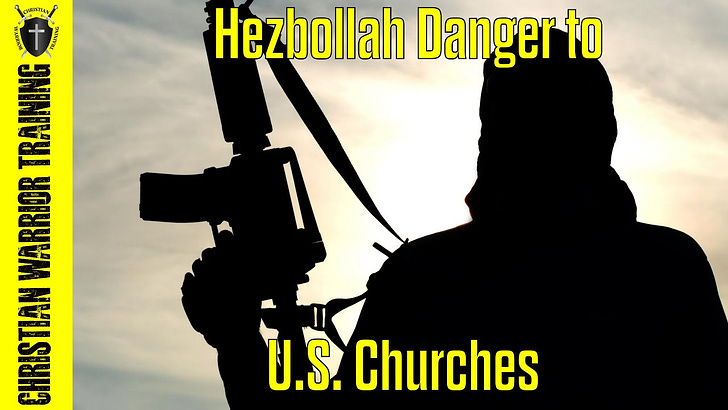
There is no indication of an imminent, nationwide attack posture directed at churches. However, the overall threat environment remains elevated, and Iranian aligned proxy networks retain the capability to conduct surveillance, intimidation, or violence if triggered by broader geopolitical events.
This assessment aligns with the current Church Security Threat Level and does not warrant escalation at this time, but it does reinforce the need for disciplined awareness and readiness.

Background and Context
Iran’s president has publicly framed ongoing U.S. and Israeli pressure as a comprehensive war involving military, economic, political, and internal destabilization efforts. This language is notable not because it announces a specific action, but because it signals how Iranian leadership is preparing domestic and regional audiences for prolonged confrontation.
At the same time, the United States and Israel continue to signal potential military action tied to Iran’s nuclear and ballistic missile programs. This combination of rhetoric and posture increases the importance of understanding second and third order effects, particularly those involving Iranian aligned proxy organizations.
Analytic Assessment
Iran historically avoids direct, conventional conflict with the United States. Instead, it relies on proxy organizations, asymmetric tactics, and long term positioning. Hezbollah remains Iran’s most capable and disciplined proxy, with a global footprint and decades of experience operating below the threshold of open warfare.
According to a retired JTTF agent who worked Hezbollah investigations, the organization maintains a mature infrastructure inside the United States. That infrastructure is primarily used for fundraising, logistics, recruitment, and intelligence gathering. Operational activity has historically remained dormant unless triggered by major geopolitical events.
From a church security perspective, the concern is not Iranian rhetoric alone. The concern is the combination of:
Public escalation in Iranian language
Continued tension surrounding Iran’s nuclear and missile programs
Established proxy capability already present inside the United States
The symbolic and ideological value of churches as soft, public, non believer targets
Churches are not likely primary strategic targets. However, they remain attractive for propaganda, intimidation, and psychological impact, particularly in a retaliatory or messaging context.

Indicators Being Monitored
The following developments would require reassessment of the threat environment for churches:
Iranian leadership rhetoric shifting from broad “war” language to explicit calls for external or asymmetric retaliation
U.S. government actions, such as indictments, arrests, or public advisories, tied to Iran aligned networks operating domestically
Credible reporting of coordinated surveillance activity around churches or religious institutions across multiple locations
Trigger events, such as U.S. or Israeli strikes on Iranian nuclear or missile infrastructure
Proxy attacks overseas framed with ideological or religious justification, especially those emphasizing punishment of non believers or symbolic targets
The presence of one indicator alone does not imply imminent danger. Multiple indicators occurring together would elevate concern.

Implications for Churches
Churches should not adopt a bunker mentality. There is no justification for panic driven security measures. However, this environment reinforces several baseline principles:
Visible, trained security presence remains a deterrent
Access control and situational awareness matter more than hardware
Congregation members should be encouraged to report suspicious behavior without fear of social or cultural labeling
Security teams should remain focused on surveillance detection, behavioral anomalies, and pre incident indicators
This is an environment where professionalism, not fear, provides protection.

Alignment With Current Church Security Threat Level
This assessment is consistent with the current Church Security Threat Level as published. No immediate change is recommended based solely on Iranian presidential rhetoric.
Church security leaders should continue operating at their current readiness posture while monitoring developments tied to Iran, Israel, and proxy activity.
Updates will be provided if indicators warrant reassessment.
Biblical Perspective
Scripture calls believers to live with both discernment and faithfulness, especially in times of uncertainty.
Jesus warned His followers that periods of tension, conflict, and unrest would occur, and He instructed them to remain watchful rather than complacent. In Luke 21:36, He said, “But stay awake at all times, praying that you may have strength to escape all these things that are going to take place.” Watchfulness, in this sense, is not fear driven. It is a posture of awareness and readiness.
At the same time, Scripture does not support passivity when responsibility has been entrusted to us. Proverbs 22:3 states, “The prudent sees danger and hides himself, but the simple go on and suffer for it.” Preparation and foresight are presented as wisdom, not a lack of faith.
The protection of others, particularly those under one’s care, is treated seriously throughout Scripture. Nehemiah organized guards while rebuilding Jerusalem, not because he lacked trust in God, but because faith and action worked together. Nehemiah 4:9 records, “And we prayed to our God and set a guard as a protection against them day and night.”
The Church is not called to retreat from worship or community due to threats. Hebrews 10:25 reminds believers not to neglect gathering together, even during difficult seasons. At the same time, loving one’s neighbor includes taking reasonable steps to protect life and prevent harm.
Finally, Scripture cautions against fear as a governing force. 2 Timothy 1:7 states, “For God gave us a spirit not of fear but of power and love and self-control.” Self-control includes disciplined preparation, calm decision making, and refusing both panic and recklessness.
This threat assessment should be understood through these principles. The Church is called to remain open, faithful, and grounded in Christ, while exercising wisdom, vigilance, and stewardship over the people God has entrusted to its care.
Well written. Past on to church members
The Architecture of a Crisis Manufactured by Hostile Foreign Powers.
An exclusive exposé on the hidden forces, intelligence networks, and propaganda machinery fueling turmoil in Iran.
https://felixabt.substack.com/p/the-architecture-of-a-crisis-manufactured