


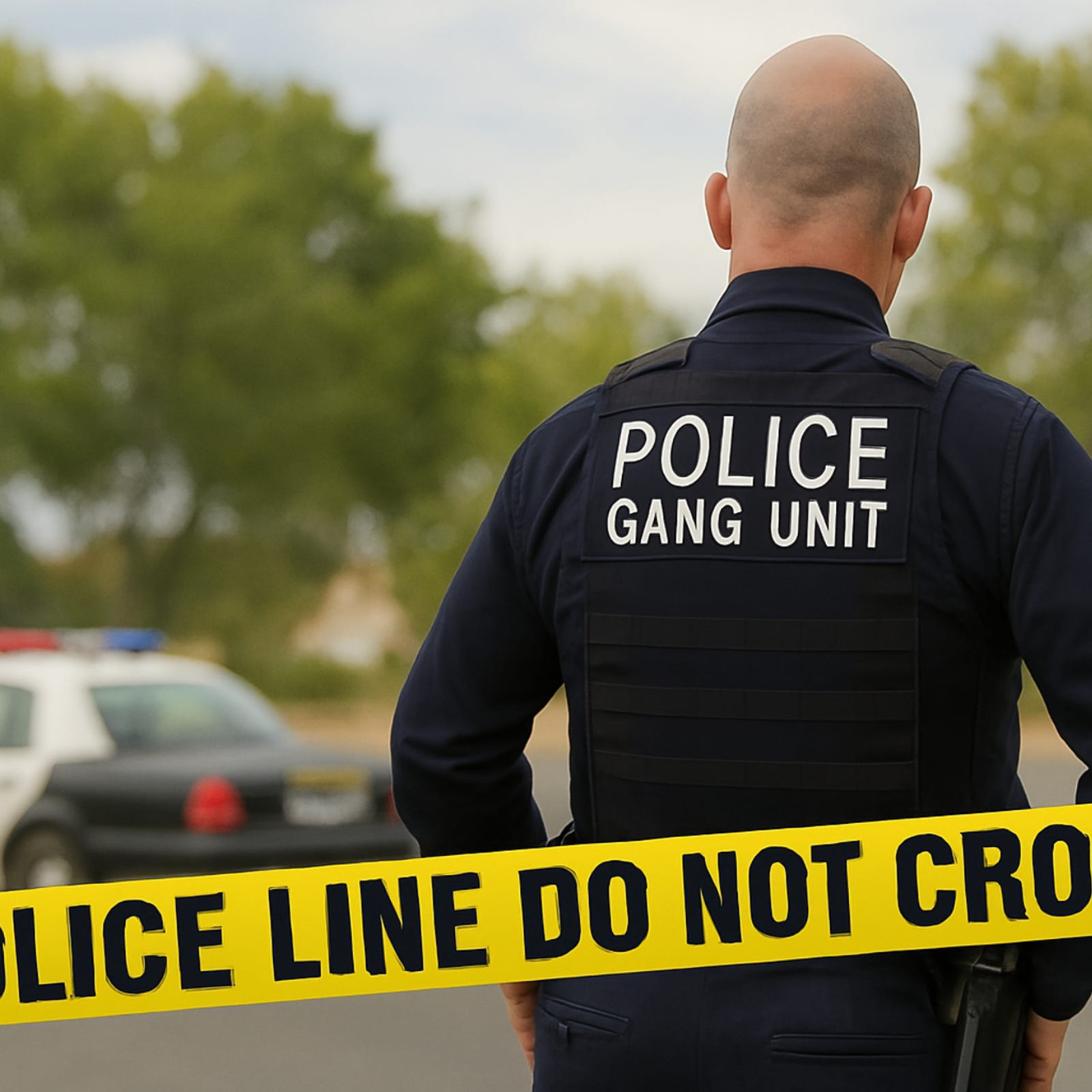
The Warnings Are Becoming Reality
For years, I have been warning my readers that a day would come when you dial 911 and no one shows up. Not because officers don’t care, but because there simply aren’t enough of them to respond, or they’re tied up on other critical incidents. After three decades in law enforcement and another eight years training officers across the country, I can tell you I’ve never seen the profession in such a crisis.
The staffing collapse we are facing is unlike anything in modern history. Departments are short-handed everywhere, recruiting is failing, and standards are slipping. People who would not have been hired ten years ago are now wearing a badge and gun. That doesn’t mean every officer on the street is unqualified—far from it. But it does mean the hiring pool is shrinking, and the cracks are beginning to show.
I bleed blue. I love this profession and I’ve dedicated my life to it. But part of loving it is being honest about where we are. And where we are right now is dangerous—not just for law enforcement, but for every community that depends on them.

The New Mexico Crisis
We don’t have to look far to see this reality unfolding. In New Mexico, Governor Michelle Lujan Grisham recently declared a state of emergency in Rio Arriba County and the city of Española because violent crime, drug trafficking, and public safety threats had overwhelmed local resources. Things were so bad that she deployed 60 to 70 National Guard troops to Albuquerque to help local police with the surge in violent crime.
At the same time, Southeast New Mexico is facing a police recruiting crisis with some departments operating at more than 30% vacancy rates. That means almost a third of the positions in some agencies are empty. Imagine calling 911 in those communities and realizing there simply aren’t enough officers to cover the calls.
When a state has to rely on the National Guard to keep basic law and order, it is no longer a localized issue—it’s evidence of a criminal justice system that is beginning to fail. And if it can happen in New Mexico, it can happen anywhere.
A System Under Strain
What is happening in New Mexico is not just a political story, it’s a warning sign to the Church. The reality is simple: if law enforcement can’t respond in time, churches must be ready to handle a crisis on their own until help arrives—if it arrives at all.
I’ve spent 30 years on the street and eight years training law enforcement since. I’ve never seen so many agencies so short on people and so desperate to fill uniforms. That desperation leads to lowered hiring standards, which in turn puts pressure on the quality of service. The men and women wearing the badge are still doing their best, but when the bench is that thin, even the best cannot keep up.
That means the responsibility shifts. For churches, it means your safety team cannot depend on a rapid 911 response. For Christians personally, it means you must prepare your household and your family for the day when no one is coming.
This is not meant to foster fear—it’s a sober recognition of the times we are in. And as followers of Christ, we are not called to bury our heads in the sand. We are called to prepare, to watch, and to stand ready to protect what God has entrusted to us.

What Churches Must Do to Be Ready
If law enforcement is stretched beyond capacity, churches cannot afford to be passive about security. A call to 911 will not always guarantee that help will arrive when it’s needed most. Your safety team must be prepared to hold the line, protect the flock, and preserve life until outside resources are able to respond.
Preparation for churches starts with training. Your team should be practicing realistic scenarios: disruptive individuals during a service, a violent intruder, medical emergencies, and coordinated evacuations. These are not abstract exercises—they are rehearsals for the day when your church is tested.
Second, your team must be properly equipped. That means more than firearms. Radios for communication, medical kits, surveillance systems, and clear defensive assignments all matter. If your church lacks the tools to respond to a crisis, you are already behind.
Third, churches need a layered security approach. Parking lot coverage, greeters trained to recognize suspicious behavior, surveillance monitoring, and a visible safety presence all add deterrence. When law enforcement is delayed, those layers can make the difference between order and chaos.
Finally, leadership must adopt the mindset that church security is a ministry, not a burden. This is about stewardship—protecting God’s people and creating a place where believers can worship without fear.

What Churches Must Do to Be Ready
The New Mexico crisis highlights a hard truth: churches must begin training as if law enforcement is not coming. For years, security teams have built their response plans around the assumption that if they called 911, officers would be on scene within minutes to take over. That assumption can no longer be trusted.
This means your scenarios must go further than they have in the past. If you face an active shooter, your team must not only stop the threat but also be prepared to clear the entire building and secure the property without police assistance. If you deal with a disruptive individual who refuses to leave, you need to plan for what happens if no officer arrives to enforce trespass laws.
I don’t have a checklist of answers for every situation your church might face. Each congregation is different, and each facility presents its own challenges. But I can tell you this: if you’re building your plans on the expectation that law enforcement will come to finish the job, you’re training for a world that may no longer exist. Train as if you are the only line of defense. If the police do arrive in time, that’s a bonus—not the plan.
What Christians Must Do Personally
The same principle applies to your personal life. As Christians, we need to be prepared to defend our families, our homes, and even ourselves with the mindset that no outside help is guaranteed. If law enforcement is overwhelmed, you may be the only protection your loved ones have in a critical moment.
This means investing in training—not just owning a firearm, but knowing how to use it under stress, practicing safe handling, and running through scenarios where you may have to act before anyone else arrives. It also means acquiring equipment—medical supplies, communications, lighting, and defensive tools that give you options when emergencies strike.
Just as important is the mindset. Christians must recognize that being their own first responder is not a lack of faith, it’s an act of stewardship. God has entrusted you with your family and your resources, and preparing to protect them honors that responsibility.
The time to prepare is not when the crisis hits, but today. The Christians who are ready—spiritually, mentally, and physically—will be the ones who can stand firm when others are panicking.
A Biblical Call to Be Ready
Scripture makes it clear that God expects His people to live prepared and alert. This is not about fear, but about obedience and faithfulness.
Jesus told His disciples in Luke 12:35–36, “Be dressed ready for service and keep your lamps burning, like servants waiting for their master to return…” That command was spiritual, but it carries a principle: followers of Christ are to be watchful and prepared, not caught off guard.
The Apostle Peter warned in 1 Peter 5:8, “Be alert and of sober mind. Your enemy the devil prowls around like a roaring lion looking for someone to devour.” Alertness is not optional—it is part of our walk with Christ.
Paul reminded the church in Ephesians 6:13 to, “Put on the full armor of God, so that when the day of evil comes, you may be able to stand your ground.” While that armor is spiritual, the call is practical. We are told to prepare in advance for the day of trial, not scramble when it arrives.
Finally, 2 Timothy 4:2 commands us to, “Be prepared in season and out of season…” That readiness extends beyond preaching—it is a principle for the whole Christian life. Be prepared when things are calm, so you will stand when the storm comes.
The crisis in New Mexico is not just a political issue or a law enforcement problem—it is a warning to the Church. The Lord has told us to be ready. For churches, that means training as if police will not come. For Christians, it means being prepared in our personal lives to stand firm in faith and in action.
We cannot control the collapse of the justice system, but we can control our readiness. Pray, prepare, and stand watch. If help arrives, that is a blessing. If it does not, you will already be ready—because God has commanded it.
Great analysis. I have a brother-in-law who’s retired SWAT Sgt for a city in DFW, TX. He has said he would not join PD anywhere anymore with all of the restrictions and anti-cop rhetoric from politicians now.
I have been to countries with “national police”. It is what Obama professed years ago and that is a bad idea. It is centralized law enforcement and whatever the current administration wants done gets controlled at the local level to the specific citizens. Control law enforcement and you control the population. Think Hitler’s “brown shirts” in the 1930’s.
I lived in a county that had 2 sheriff deputies on duty during the night. We prepared for the time that we needed that defense because we knew for a fact no one was coming till it was too late. On the other note about crime statistics. If people are unaware that they have been fudging the numbers for a long time then you really haven’t been paying attention. We noticed it during Trumps first term and then I talked to a local officer at that time and he said that started during Obamas last term. Mostly in Democrat lead cities.