


I apologize for so many emails. We have entered a time of great danger and information is coming out at a rapid pace. I am filtering through the noise to get you only the most important information. I do believe that you should make an effort to read each email as you might miss a piece of critical information.
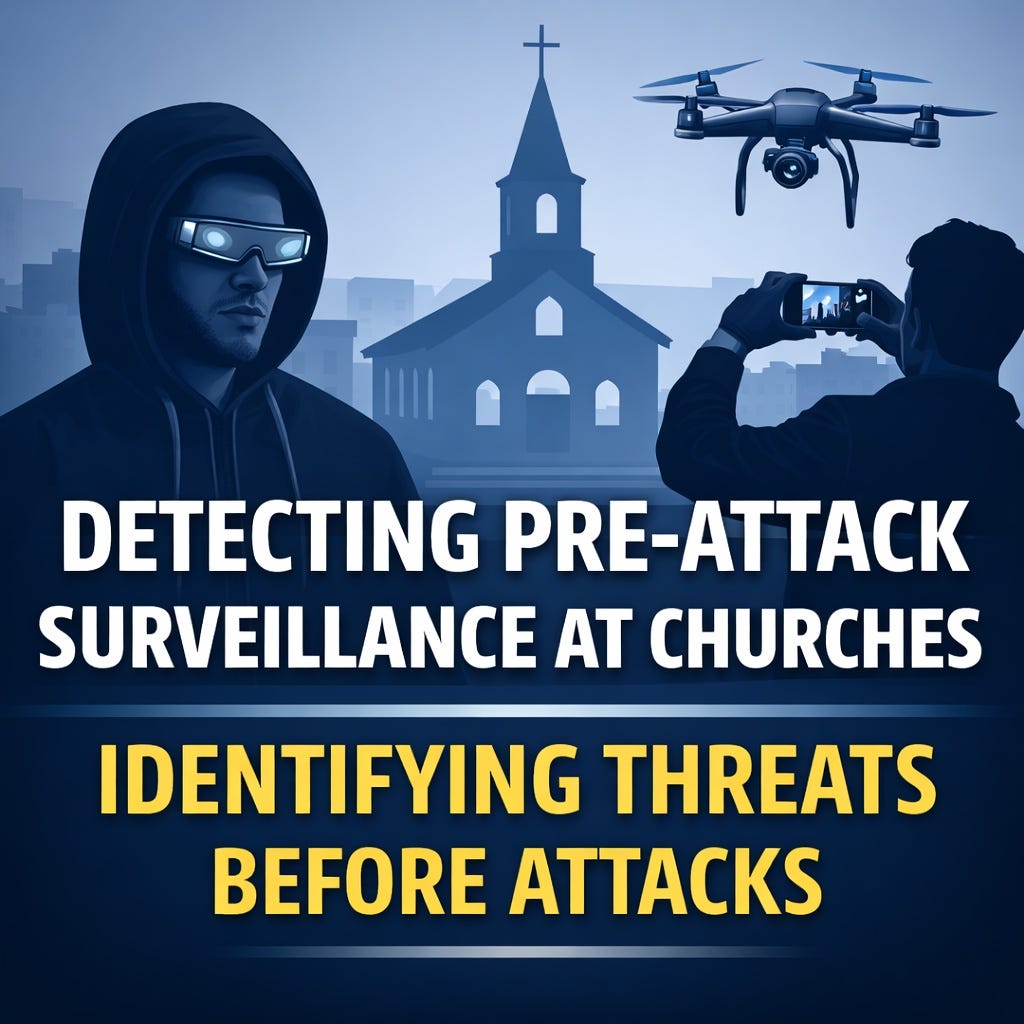
New Resource for Church Security Teams: Recognizing Pre-Attack Surveillance
Most people think of an attack as the moment violence begins. In reality, attacks are usually preceded by a period of preparation. During this stage, the attacker studies the location, observes routines, and looks for vulnerabilities.
This phase is called pre-operational surveillance.
Individuals planning acts of violence often visit a location multiple times before carrying out an attack. They may observe entrances and exits, watch security personnel, take photographs, record video, or ask questions about staffing and security procedures. In some cases they use technology such as drones, smart glasses, or mobile phones to quietly document building layouts and activity patterns.

Understanding these behaviors gives church security teams an opportunity to recognize suspicious activity before an attack occurs.
I am sharing the document below because it outlines many of the surveillance behaviors that have been observed in real attack planning. While the material was originally developed for law enforcement and security professionals, the concepts are very relevant to church safety ministries.
Church security teams should be aware of behaviors such as:
Individuals repeatedly visiting the property without attending services
People photographing entrances, exits, or security personnel
Vehicles parked nearby while occupants observe the building
Individuals asking probing questions about security operations
Attempts to access restricted areas or follow others through secured doors
Use of recording devices or drones to capture images of the facility
These behaviors do not automatically mean someone is planning an attack. However, when they appear together or occur repeatedly, they may indicate that someone is studying the location.
One of the responsibilities of a church security team is maintaining awareness of what is happening around the facility. Early recognition of suspicious behavior allows teams to document the activity, engage the individual if appropriate, and notify law enforcement when necessary.

Many attacks can be disrupted when suspicious activity is reported early.
The document below provides additional details about how attackers conduct surveillance and the types of behaviors security personnel should recognize.
Church safety ministries should review this information and consider how these indicators apply to their own facilities, routines, and security procedures.
Staying alert to these warning signs can help protect the congregation long before a crisis develops.

Don’t apologize for the number of emails. In fact we should be thanking you for them. CWT is the one that I look for first every time I get near the computer.
Another tool that could be used by potential terrorists is the use of “smart glasses.” These can be purchased at stores such as Best Buy. They look like regular glasses but records video and sound.