


Preface
Over the next several months, I will be addressing the role of rifles in church security. This is not a subject to approach casually. Rifles have their place, but when they are deployed without discipline or policy, they can do more harm than good. My goal in this series is to help churches establish standards that prevent reckless mistakes while ensuring they are prepared for the threats we face today.
We are starting with this article, which sets the guard rails for rifles in church security. Alongside it, I am providing a sample rifle policy that churches can adapt for their own use. Future articles will cover additional topics such as how and when rifles should be deployed, what rifles and optics are best suited for church defense, and how to properly store them.
The purpose is simple. If rifles are going to be present in a church security ministry, they must be present for the right reasons, handled by the right people, and supported by the right policies. Anything less opens the door to tragic and irreversible mistakes.
Why Rifles Have a Place in Church Security
In recent years, churches have become the target of some of the most violent attacks in our nation. From active shooters entering sanctuaries to armed assailants confronting congregations in parking lots, the threats we face are no longer hypothetical. For church security teams, the responsibility to protect the flock requires both preparation and wisdom.
Most churches rely on armed security volunteers who carry concealed handguns. Handguns are effective defensive tools, but they have limits. In a crowded environment, especially in a large sanctuary, handguns lack the precision and accuracy that may be necessary to stop an attacker at distance without endangering innocent lives. This is where the rifle becomes relevant.
A rifle provides better accuracy, greater stopping power, and the ability to neutralize threats before they close the distance to the congregation. It is the same reason police departments across the country transitioned decades ago from relying solely on handguns and shotguns to adopting patrol rifles as standard equipment. When the worst happens, rifles give a trained defender the tools to stop the threat quickly and decisively.

But rifles are not without risks. Their presence in a church security environment demands discipline, training, and a professional standard of care. A rifle is not a prop. It is not a show of force. And it is not a tool to be carried “just in case.” It is a weapon of last resort for the gravest situations a church might face.
This article is being written because I have seen a disturbing trend: churches deploying rifles without the proper policies, training, or oversight. Well-meaning volunteers have introduced rifles into their ministries without understanding the liability or the skill required to use them responsibly. If a mistake is made with a rifle in a church, it will not just injure or kill an innocent person. It will likely end that church entirely.
For that reason, rifles must only be deployed under strict standards. They must be carried only by qualified operators who have recent, significant training in how to use them in a crowded environment. They must be quality rifles, fitted with reliable optics, using defensive-grade ammunition. Anything less is reckless.
The Catastrophic Risk of Doing It Wrong
The greatest danger in deploying rifles for church security is not that they will fail in a moment of crisis. The true danger is that they will be used improperly. A rifle handled without discipline can create outcomes far worse than the threat it was intended to stop.
Consider what happens if an unqualified volunteer discharges a rifle inside a sanctuary and strikes an innocent worshipper. The results would be devastating on every level. Not only would a member of the congregation suffer or lose their life, but the legal and financial repercussions could bankrupt the church. Civil lawsuits, possible criminal charges, loss of insurance coverage, and a destroyed reputation would follow. In short, one mistake with a rifle can end a church.
This is not speculation. In law enforcement, agencies have faced multi-million dollar lawsuits and federal investigations when officers mishandled rifles. Those agencies survived because they had the weight of government and taxpayer funding behind them. A church has no such cushion. For most congregations, the fallout from one tragic mistake would be impossible to survive.
This is why churches must treat rifles as a tool of last resort. They are not for every volunteer. They are not for routine display. They are not for people who simply like the feel of carrying one. Rifles are for highly trained operators who understand the gravity of their responsibility. If the guard rails are not in place, if the standards are not enforced, then the risk of deploying rifles outweighs any possible benefit.
What Training Should Look Like
If a church is going to authorize rifles, the training standard must be crystal clear. Training is the difference between a lifesaving response and a church-ending mistake. It is not enough for a volunteer to be familiar with rifles from hunting, recreational shooting, or even basic concealed carry. Defensive rifle use in a church environment is unique and requires a professional level of preparation.
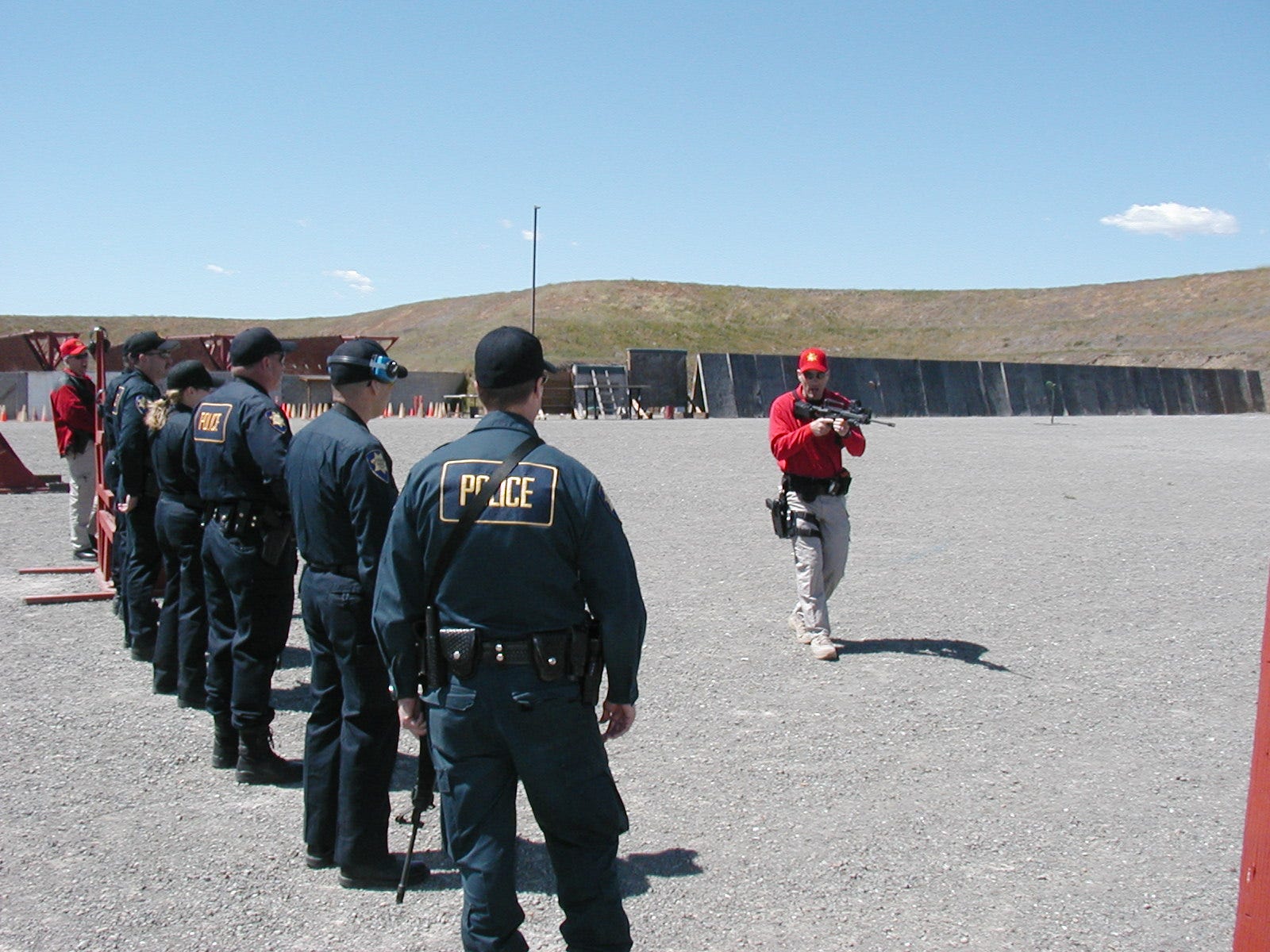
The baseline should be at least 16 hours of structured rifle training, comparable to a patrol rifle course in law enforcement. This training should be hands-on, under the supervision of qualified instructors, and cover far more than static marksmanship. A proper course will include:
Marksmanship at distance. Operators must be able to engage accurately not only inside the sanctuary but also in the parking lot. Nearly 75 percent of violent encounters at churches begin outside. That means operators must be able to make confident hits from the front doors of the church to the farthest edges of the property without risking innocent lives.
Malfunction clearance. Rifles fail. Operators must be able to fix stoppages under stress without losing control of the weapon.
Shooting in crowded environments. Target discrimination, shooting past innocents, and understanding safe angles of fire are essential skills both inside and outside the church. A bullet that misses in a parking lot may strike an uninvolved family hundreds of yards away.
Low-light operations. Many incidents in parking lots occur during evening or early morning services. Operators must be trained to use weapon-mounted lights effectively without blinding allies or losing control of the scene.
Stress shooting. It is not enough to shoot well on a calm range. Operators need to train under physical and mental stress to simulate the chaos of a real incident.

This initial training is only the starting point. To maintain proficiency, rifle operators must qualify twice per year on an established course of fire. This ensures that skills are not only learned but retained. Training from years past does not make someone ready for today. Ongoing training is mandatory.
Beyond paper qualifications, churches should incorporate scenario-based training at least once a year. Force-on-force simulations with role players or training rifles can recreate the realities of a crowded church and help operators practice decision-making under pressure. These exercises reveal weaknesses and prevent complacency.
If a church cannot meet this level of training, it should not deploy rifles at all. Anything less than this standard places the congregation at unnecessary risk and creates liabilities too great for any church to bear.
Equipment Standards: Only the Best for Protecting the Flock
The quality of equipment used in church security is just as important as the training of the operator. A rifle that malfunctions or fires ammunition that over-penetrates is a danger to the very people it is supposed to protect. In a church environment, there is no room for shortcuts.
Rifles
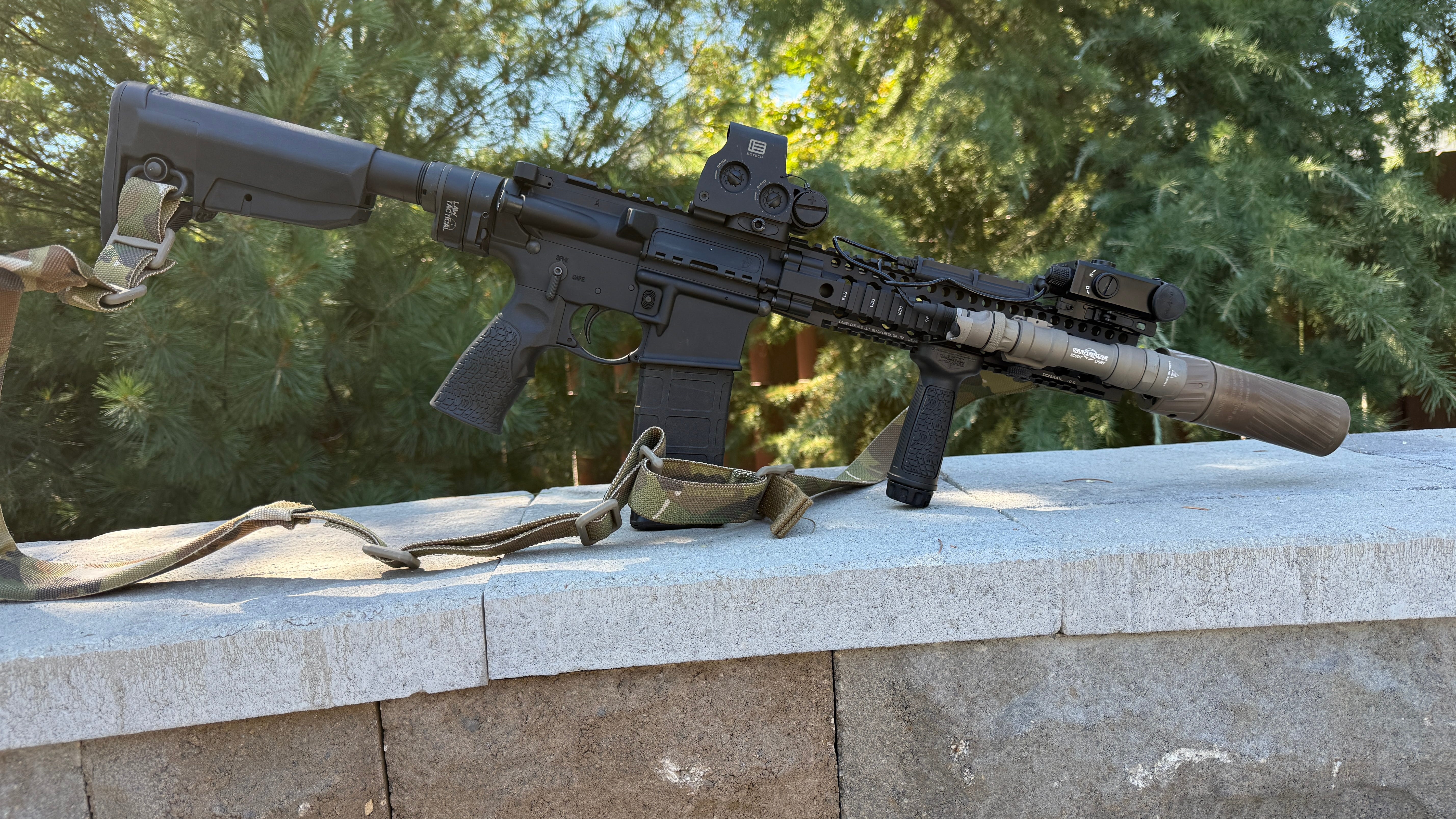
Not all AR-15s are created equal. Home-built rifles assembled from spare parts or bargain components have no place in a church security role. These rifles may function fine on a recreational range, but under the stress of a deadly encounter their weaknesses will show. For church security, only factory-built rifles from reputable manufacturers should be used. Reliability must be absolute.
Optics
A rifle without a quality optic is incomplete. Cheap red dots that lose zero or fail under recoil are unacceptable. A miss in a sanctuary or a parking lot could mean the death of an innocent. Churches should require optics from proven manufacturers, whether a rugged red dot or a low-power variable optic (LPVO) that allows both close and distance accuracy. Iron sights may serve as a backup, but they should not be relied upon as the primary aiming system.
Ammunition
The choice of ammunition is a matter of life and death. Reloaded ammunition, surplus green tip, or bargain 55-grain ball rounds have no place in a church security rifle. These rounds risk over-penetration or failures to stop a threat. Only high-quality, factory-manufactured defensive ammunition designed for controlled expansion should be used. Ammunition should be consistent, reliable, and matched to the specific rifle. I recommend Speer Gold Dot, Hornady TAP and Black Hills.
Accessories
Two accessories are non-negotiable. First, a sling, which allows the operator to retain control of the rifle while transitioning to other tasks. Second, a weapon-mounted light, which ensures positive identification of threats in low-light conditions. No rifle should ever be deployed in a church security environment without both.
Maintenance
Even the best rifle will fail if neglected. Every operator is responsible for cleaning and maintaining their rifle according to manufacturer specifications. Annual inspections by a qualified armorer or gunsmith should be required to ensure that every rifle remains reliable.
Guard Rails for Deployment
Even the best rifle in the hands of the most highly trained operator can cause disaster if it is deployed without restraint. Churches must put strict guard rails in place to govern when and how rifles are used. Without them, security teams risk creating confusion, panic, and liability in moments when clarity is most needed.
Storage
Rifles should be secured when not in use. The standard is simple: locked in a church security office safe or in a vehicle-mounted safe that meets industry standards. Rifles may be stored with a loaded magazine inserted but with no round in the chamber. This allows for rapid deployment while maintaining a margin of safety.
Visibility
Rifles should never be carried openly for routine church security duties. Their presence in a sanctuary or lobby is likely to alarm the congregation and create an atmosphere of fear rather than safety. Rifles are for emergencies only. They should remain out of sight until the moment a deadly threat requires them.
Authorized Deployment
Deployment of a rifle should occur only under two conditions. First, when an immediate deadly threat is underway that clearly requires rifle-level response, such as an active shooter or armed assailant. Second, when the Security Director or designated team leader authorizes deployment based on credible intelligence of an imminent threat. Anything less is an abuse of the weapon’s purpose.
Assignment
Each rifle should be individually assigned to one qualified operator. Sharing rifles among multiple team members creates confusion and weakens accountability. One rifle, one operator, one standard.
Decision Making Under Pressure
Every rifle operator must be trained to understand that their responsibility is not only to stop the threat but also to protect the innocents around that threat. This means waiting for the right angle, controlling adrenaline, and sometimes holding fire. The decision to deploy must balance urgency with discipline.

The Biblical Perspective
Placing guard rails around rifles in church security is not about limiting freedom. It is about living out biblical principles of order, accountability, and stewardship.
Paul reminded the church in Corinth that “everything should be done in a fitting and orderly way” (1 Corinthians 14:40). God’s people are not called to act in chaos but in discipline. The same applies to church security. Weapons carried without policy or oversight invite disorder, while guard rails ensure that even in moments of crisis we honor God through order and clarity.
James warns that those who lead are held to a stricter standard (James 3:1). The same principle applies to rifle operators. Not everyone in the congregation is called to carry a rifle. Those who do must accept that their responsibility comes with higher expectations of training, accountability, and self-control.
The parable of the talents (Matthew 25:14–30) shows us that what God entrusts to us must be managed with wisdom. A rifle entrusted to a church security team is not for show, nor for personal use. It is a tool to be cared for, trained with, and deployed only in the right circumstances. Mismanaging that responsibility is not only dangerous but unfaithful to God’s calling.
Finally, Proverbs reminds us that zeal without knowledge leads to mistakes: “Desire without knowledge is not good, how much more will hasty feet miss the way!” (Proverbs 19:2). Wanting to protect the church is a good desire, but doing so without training or policy leads only to error. Passion must be matched with preparation.
Guard rails for rifles are not about restriction — they are about stewardship. They ensure that the tools God has entrusted to us are used with wisdom, restraint, and accountability. That is not weakness. That is obedience.
Discipline is Protection
Rifles can be the right tool in the darkest of moments. They provide accuracy, stopping power, and the ability to end a deadly threat before it reaches the congregation. But they also bring enormous risk. One negligent discharge, one missed shot, one act of recklessness could wound or kill an innocent person and end the life of the church itself. These are church-ending mistakes.
That is why guard rails are not optional. They are biblical. God calls His people to order, to accountability, and to wise stewardship of what He entrusts to us. Rifles in church security must be governed by strict policies, significant training, and disciplined operators who understand the gravity of their responsibility.
This is only the beginning. In the coming months we will continue addressing rifles in church security — how to deploy them wisely, what rifles and optics are best suited for defense, and how they should be stored. Each step of this discussion is meant to protect churches from haphazard practices that invite disaster.
If your church is considering the use of rifles, do not rush. Do not cut corners. Establish the guard rails now so that when the day of testing comes, you are ready. Protection is not found in freedom without limits, but in disciplined readiness that honors both God and His people.
What do you think? Should churches bring rifles into their security ministries, and if so, what standards do you believe must be non-negotiable? Share your thoughts in the comments.
Keith; Thanks for your time and training. I was thinking of another piece of equipment to be deployed with the rifle. Possibly a VEST with security on it to be worn, when deployed. Also when LEO or SWAT arrives you want solid ID of our "man with a gun". Turning over the scene to them. At the same time a spotter with the shooter might be beneficial for communication. If I were on the scope, I don't want to be distracted.
Keith, we've been considering a rifle, and this is solid information. It's been in the works, and out of caution, we haven't made that step. This will help a lot