


The church security world has a culture problem, and instructors carry much of the responsibility for it.
This became clear during a recent online discussion. A church safety team member asked a simple equipment question about adding a weapon mounted light to his Glock 19 while serving on his church team. It was a straightforward question about gear and tactics, something that comes up often among people who carry firearms for defensive purposes.
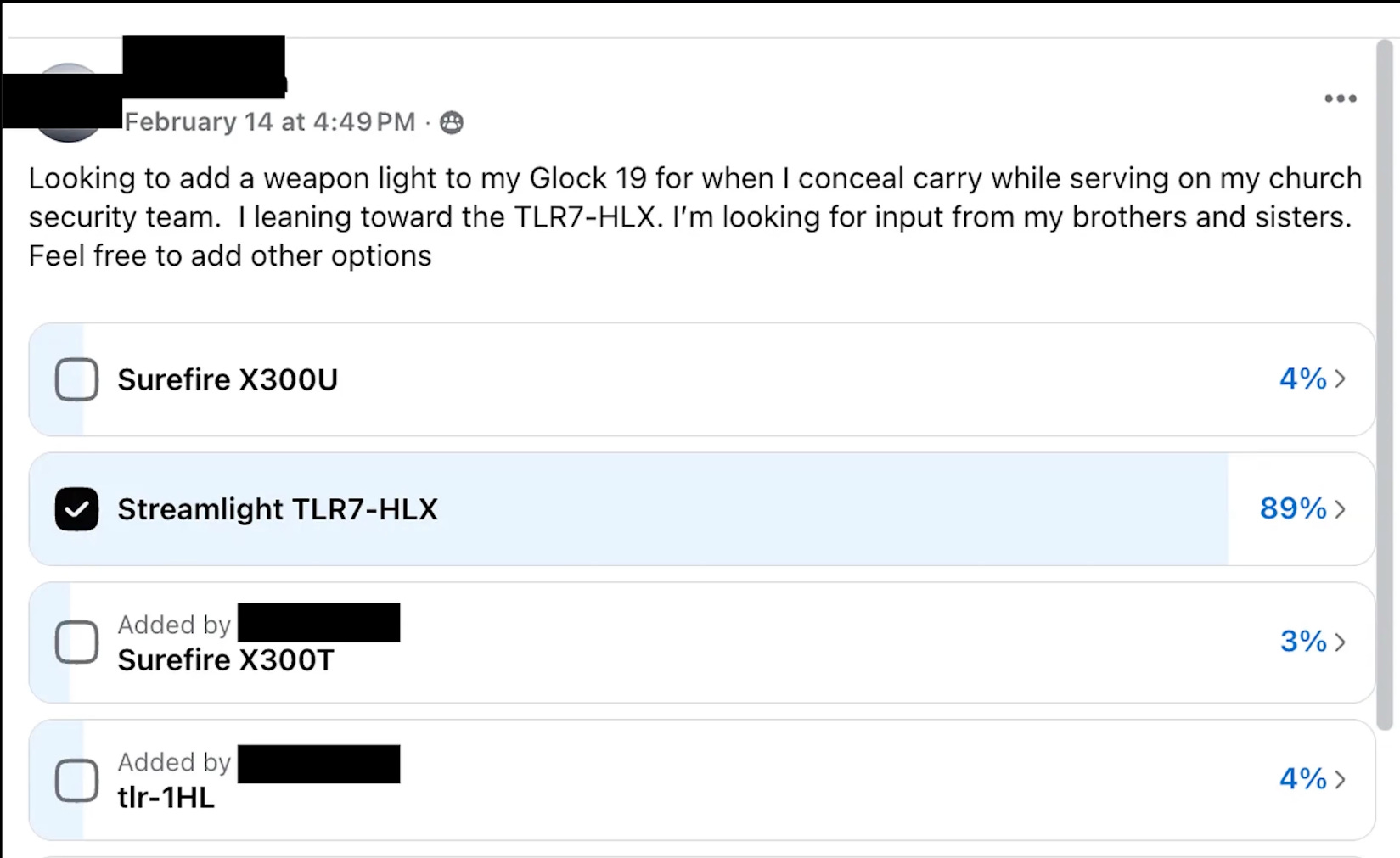
Instead of a thoughtful response, an instructor entered the conversation and dismissed the idea almost immediately. The tone suggested the question itself reflected poor judgment. The instructor responded by asking why anyone would use a weapon mounted light and suggested that a handheld flashlight should be carried instead. There was little explanation of tactics or context, only a quick dismissal of the idea.
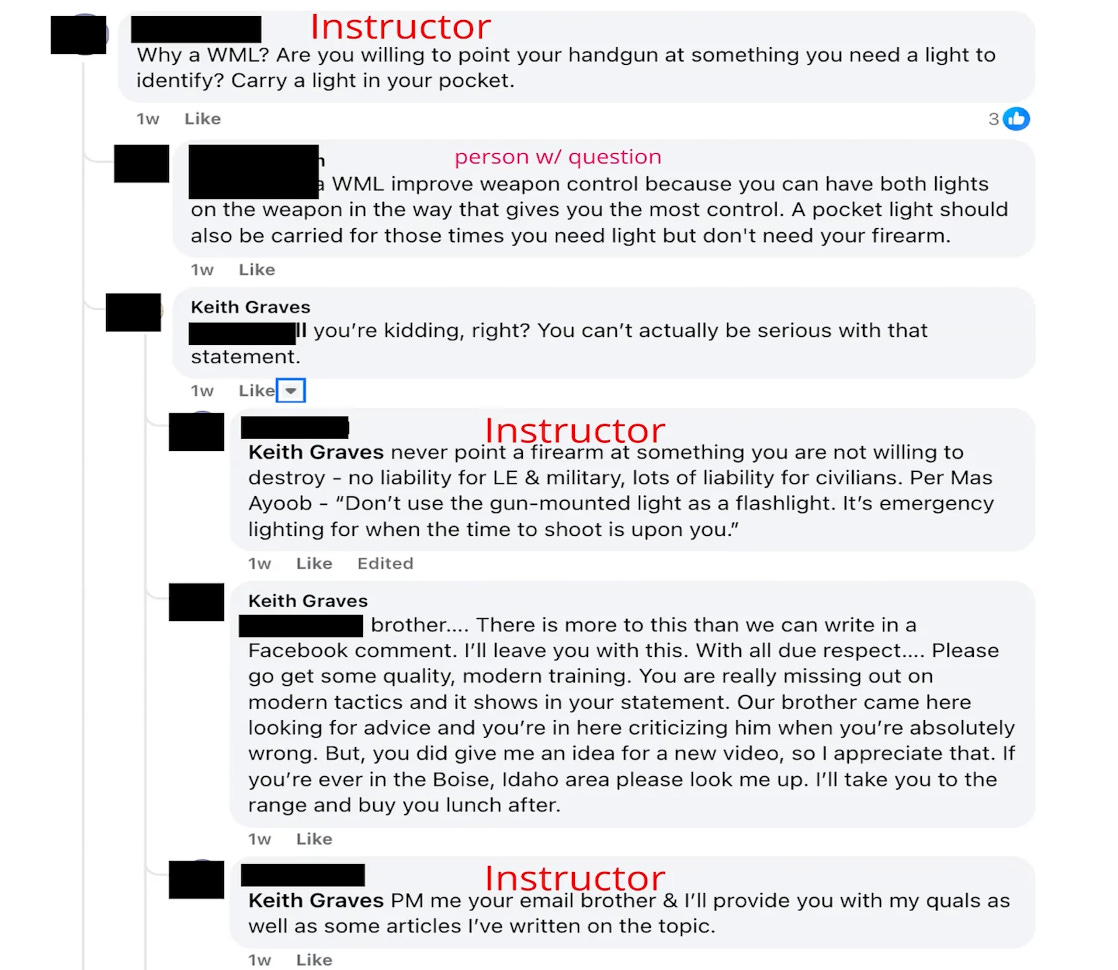
That exchange is not important because of who was right or wrong. Disagreement about tactics is normal in the training world. The issue is what that interaction represents about the culture inside the church security community.
Disagreement Is Healthy. Contempt Is Not.
Good instructors challenge ideas. That is part of how training improves. Debate over tactics, equipment, and procedures helps sharpen everyone involved.
Contempt does the opposite.
When an instructor responds with sarcasm or dismissal, the message sent to newer members is clear. Questions are not welcome. If someone speaks up, they risk being embarrassed in public.
Many church security team members are volunteers who are trying to learn how to protect their congregations. Publicly undermining them does not build competence. It creates silence.
The result is predictable. Volunteers stop asking questions. They stop participating in discussions. They carry uncertainty into situations where clarity could save lives.
Join us for our Warrior Bible Study each Sunday!
Credentials Are Not an Argument
Another problem often appears in these exchanges. When challenged, some instructors respond by presenting their credentials.
They list certifications. They reference articles they have written. They explain how long they have been teaching.
Experience has value. Training has value. Credentials matter.
None of those things answer the question being asked.
An argument stands or falls on its reasoning and evidence. A resume cannot replace explanation. Tactics evolve, equipment evolves, case law evolves, and best practices evolve. If an instructor is not staying current, yesterday’s training can become today’s liability.
In the church security environment, that risk carries real consequences.
The Weight of Influence
The church security space operates differently than most tactical communities.
Many churches cannot afford professional training. Their safety teams are built from volunteers who may have little or no prior experience. In many cases, their primary source of instruction comes from online content, social media groups, or a small number of instructors.
That influence is significant.
A single confident voice in a Facebook group can influence dozens of teams across the country. Those teams may build policies, training plans, and response procedures based on what they are told.
That level of influence should create humility in anyone who teaches.
Even instructors with large platforms should approach their work with caution. When thousands of churches rely on a single source of information, the responsibility becomes enormous.
The Warning Given to Teachers
Scripture speaks directly to the responsibility carried by those who teach.
James 3:1 states:
“Not many of you should become teachers, my brothers, for you know that we who teach will be judged with greater strictness.”
That warning applies far beyond the pulpit.
Anyone who positions themselves as a teacher inside the body of Christ carries that responsibility. Instructors who train church security teams are influencing how believers respond during violent events, emergencies, and life threatening situations.
Those decisions will affect families, congregations, and communities.
The responsibility should cause every instructor to pause and examine how they teach.
Pride Exists Even in Christian Spaces
Many people assume that attaching the word “church” to an industry removes ego from the equation. Experience shows that this is not true.
Pride appears anywhere influence exists. It exists in law enforcement, the military, and every professional field. Church security is no exception.
Some instructors respond to new voices in the space with hostility rather than evaluation. Others resist ideas simply because they come from outside their circle.
Galatians 5:26 offers a warning about this kind of behavior:
“Let us not become conceited, provoking one another, envying one another.”
When someone brings experience and strong convictions into a discussion, the correct response is evaluation. The standard should always be truth, not territorial control.
Church Security Is Different
Church security training is not the same as teaching tactical skills to law enforcement or military personnel.
Instructors in this space are not preparing SWAT teams. They are not training private military units.
They are preparing volunteers who are trying to protect their congregations so families can worship Christ safely.
That reality changes the way instructors should approach their role. Teaching in this environment requires more than technical knowledge. It requires humility, patience, and restraint.
These volunteers are going to face some of the worst moments their churches may ever experience. Their instructors influence how they think about force, authority, responsibility, and restraint.
The Danger of Pride
Scripture repeatedly warns about the dangers of pride.
Proverbs 16:18 states:
“Pride goes before destruction, and a haughty spirit before a fall.”
Instructors who allow pride to shape their behavior eventually lose the ability to examine their own mistakes. They resist correction. They assume their conclusions are always correct.
When that attitude combines with public influence, the damage multiplies.
Errors spread quickly, especially in online communities where thousands of people are watching.
Leadership Requires Example
Christian leadership carries expectations that go beyond technical competence.
First Peter 5:2–3 instructs leaders:
“Shepherd the flock of God that is among you… not domineering over those in your charge, but being examples to the flock.”
The language in that passage speaks to pastors, but the principle extends to any form of Christian leadership.
An instructor who humiliates others publicly is not setting a good example. An instructor who hides behind credentials rather than explaining his reasoning is not setting a good example. An instructor who refuses to examine his own blind spots is not setting a good example.
Strong convictions and humility can exist together. It is possible to disagree sharply and still treat others with respect.
A Growing Community Needs Mature Leadership
Church security is expanding rapidly. More churches are forming safety teams every year. More volunteers are stepping forward to protect their congregations.
That growth demands maturity from those who teach.
Instructors should ask themselves difficult questions:
Are they participating in online hostility or quietly encouraging it?
Are they correcting people to help them improve, or correcting them to demonstrate authority?
Are they staying current with evolving tactics and legal standards?
Are they guarding their hearts against pride?
Psalm 139:23–24 offers a prayer that every instructor should consider regularly:
“Search me, O God, and know my heart. Try me and know my thoughts. And see if there be any grievous way in me, and lead me in the way everlasting.”
Leading With the Right Priorities
Church security work exists for one reason. It allows congregations to worship Christ without fear.
The work is not about building a brand. It is not about social media influence. It is not about collecting certifications or winning arguments in online forums.
It is about protecting people and honoring Christ.
Debates about tactics and equipment will always continue. That is healthy. Discussion improves training.
What should disappear from the church security world is contempt, pride, and authority built only on credentials.
If someone teaches in this space, they should lead with precision, restraint, and humility.
And they should remember who they ultimately answer to.
Our Lord and Savior, Jesus Christ.
Everyone,
Try not to focus on the Facebook debate about weapon mounted lights. That is just an example of the overall problem.Try to focus on how we are interacting with each other to lift each other up. That part, iron sharpening iron, has been lacking. I’m not gonna lie, it has taken me by surprise that we aren’t lifting each other up.
Actually, you should carry both a handheld & WML. 2 different usage scenarios!