


Church security teams sometimes need to be on alert for specific individuals who may pose a threat to the safety of the congregation. In law enforcement, this type of notification is called a BOLO—Be On the Lookout. In the church security world, BOLOs can be equally important, but how they’re shared needs to be handled with discernment and care.
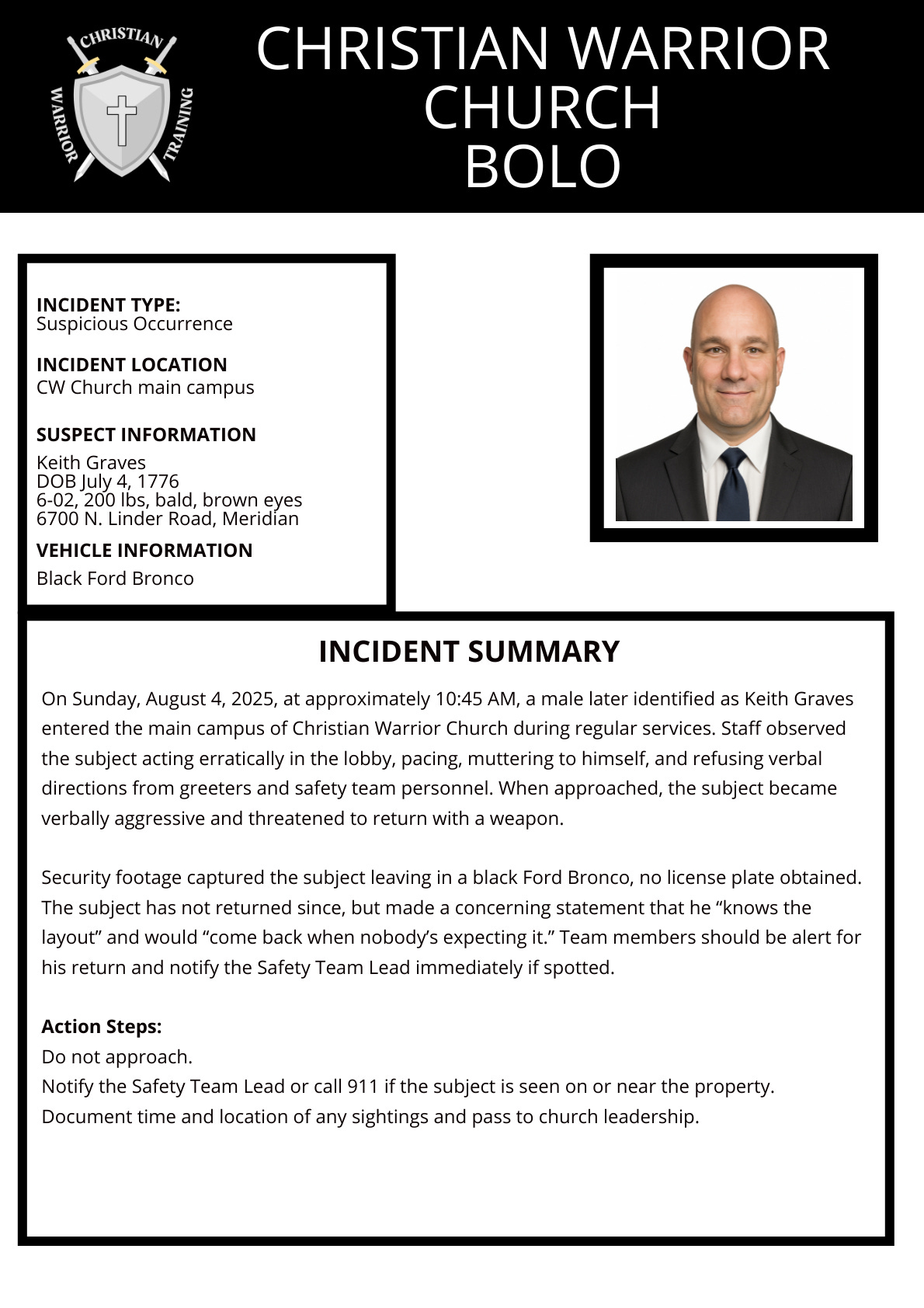
What is a BOLO and When Should One Be Issued?
A BOLO is a warning to your team to be on alert for a specific person, vehicle, or suspicious behavior. For example, you might issue a BOLO if:
A known sex offender begins attending your church
A domestic violence suspect has threatened a church member and may appear
Someone has been casing your parking lot during services
A mentally unstable person with a history of church disruption has returned
BOLOs should not be used to share general concerns. They are reserved for credible, specific threats that require alertness and a potential response.
What Information to Include
The more specific and actionable the information, the better. A proper BOLO should include:
Photo: If available, include a clear and recent photo
Name and aliases: Include legal names and any known nicknames
Detailed description: Height, weight, clothing if recently seen, tattoos, etc.
Vehicle: Make, model, color, license plate (if known)
Reason for the BOLO: Explain the threat clearly and concisely
Last known location/date/time: Helps assess current risk
Instructions for your team: What to do if this person is seen (observe, notify, do not approach, call 911, etc.)
You should also include who issued the BOLO and a contact person for follow-up.

What Not to Include
Security teams need to guard against gossip, slander, and violating people’s privacy unnecessarily. Leave out:
Medical or psychological diagnoses
Unconfirmed rumors
Sensitive investigative details from law enforcement unless cleared for release
Social media screenshots unless they directly reference a threat
If you’re unsure whether to include something, ask: "Does this help our team stay safe and alert, or does it cross the line into speculation or gossip?"
How to Distribute BOLOs Securely
Distributing a BOLO improperly can create major liability and even escalate a situation. Here are some best practices:
Use secure communication: Signal, encrypted email, or password-protected cloud storage are ideal
Avoid group texts or open email threads
Label the document CONFIDENTIAL at the top and bottom
Limit distribution: Only those who need to know should have it
Set an expiration or review date: Prevent old alerts from lingering
Remind your team that BOLOs are not to be forwarded or discussed outside the security ministry.
When BOLOs Get Into the Wild
If a BOLO is leaked—whether accidentally or maliciously—it can damage your church’s reputation, create legal issues, and cause harm to the subject of the alert. Always treat BOLOs as you would any sensitive security document.
It’s wise to conduct regular reminders during team briefings about the importance of confidentiality and operational security.
Downloadable BOLO Template
To help your team implement this effectively, I’ve created a downloadable BOLO template. It’s easy to fill out and includes:
Sections for all essential details
Confidentiality warning footer
Your church’s name and contact (or leave it blank to customize)
You can access the template below.

Your photo looks great. I sent it to the church in case they see you. (lol kiddin)
Always great information to add to our tool chests. Thanks Keith !